Physician-led AI fluency · For academic medicine
Every leader gets a chief of staff. So should you.
The Academic AI Chief of Staff Build — six private 1:1 sessions over Zoom where you build a personal AI chief of staff for the work around the work: mentorship, scholarship, committees, teaching, and the promotion packet. Real fluency you keep.
Built by two physicians. Private by design — ask the questions you’d never ask in a faculty meeting.
Your clinical work has an entire industry behind it. Your academic career has you.
You carry the mentorship, the committees, the letters, the teaching prep, the talks, and the promotion packet — usually without an assistant, a system, or a spare hour to build one. That’s the gap these six sessions close: an AI chief of staff, built around you.
- Committee agenda
- Mentee letter
- CME hours
- Promotion packet
- Peer review
- Teaching slides
- Meeting follow-ups
handled.
Scattered context.
Every letter, agenda, and check-in restarts from a blank page.
Follow-through has no home.
Commitments outlive your memory of making them.
The packet never writes itself.
Years of mentoring and service that accumulate nowhere.
Six sessions. One working chief of staff.
You don’t watch a course. You build, on your own machine, with your own real work — guided 1:1 by a physician who has built the same thing.
-
AI foundations.
Beyond search: Claude and Claude Code, images and files, organizing your knowledge base.
-
Executive assistant.
Your daily and weekly operating rhythm.
-
The board of directors.
Advisors on demand for hard decisions.
-
The promotion packet.
Daily work that accumulates into evidence.
-
Manage clinician-self.
CME hours, recertification, your learning plan.
-
Manage learners.
Mentee tracking; even building teaching slides.
-
Manage scholarship.
Manuscripts, reviews, and the writing queue.
How the Build works
Six weekly 1:1 sessions on Zoom.
Just you and a physician guide. No cohort to keep up with, no one watching you learn.
You build with your real work.
Your committee, your mentees, your packet — not toy examples.
You keep the system — and the fluency.
Knowing what to hand to AI, what to keep human, and how to keep adapting as the tools change.
Two trees, one root.

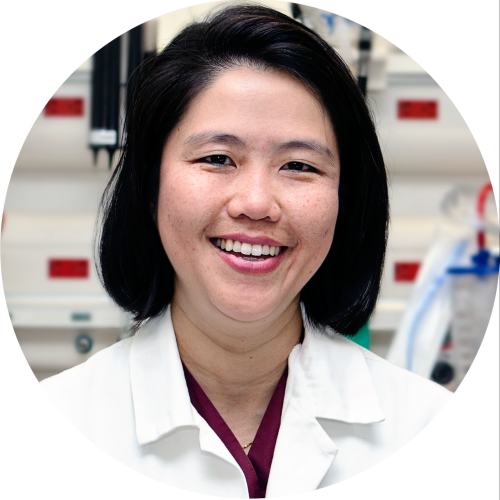
Two Trees MD is two siblings, two branches of medicine. CT Lin, MD was an internal-medicine chief medical information officer who spent two decades bringing clinicians and technology to terms. Michelle Lin, MD is an emergency physician and professor at UCSF, and the founder of ALiEM. Between them: a career of teaching physicians new tools without the hype.
Made for the mid-career and senior faculty member
- You carry significant mentorship, committee, teaching, and leadership load
- You have no EA — and no system that survives a busy week
- You’re curious about AI but have no desire to become a technologist
- You want fluency from someone who understands academic medicine
- You can commit to a short, high-touch build
Not another AI scribe. Your academic chief of staff.
Not a course you finish. Fluency you keep building.
Built by physicians, for the parts of academic medicine that don’t fit in the EHR.
Our promise
Our goal is graduates who don’t need us.
Every session teaches you to build the next tool yourself. Faculty finish able to make these systems for their own departments, which is exactly why we don’t sell department-level builds. Physicians spend their careers trying to make patients need them less. Good teaching works the same way.
A faculty-development investment you can point to.
Chairs and deans sponsor the Build for their mid-career faculty — a concrete investment in the people carrying the department, with something to show for it.
Fund fluency, not software.
You’re sponsoring your faculty’s skills, not another site license to renew.
Visible support where the load is heaviest.
Mentorship, scholarship, and promotion-readiness, strengthened for the faculty you most want to keep.
Graduates who build for the department.
Your faculty leave able to build the chair’s-letter assistant, the publication updater, and admin tooling (201–203) in-house — no outside consultant, and no us.
Start with a conversation.
A short intro call — what you’re carrying, what you’d build first, and whether the Build is a fit.
Book an intro call